
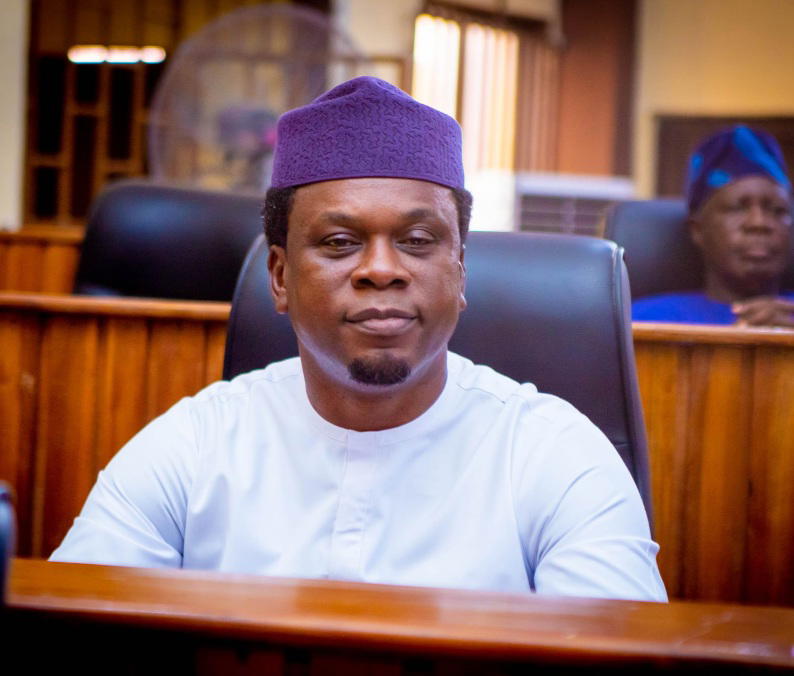
The lawmaker representing Irepodun/ Irepodun Constituency 1 in Ekiti State House of Assembly, Hon. Femi Akindele, has explained how public-private partnership, PPP, in the water sector can work, noting that operating the sector fully as a public service will not ensure efficiency.
Hon. Akindele made the point at the stakeholders’ awareness camp organised by the Ecumenical Water Network, EWN, Nigeria, as part of the Voices for Water Justice project, at the Institute of Church and Society, ICS, Samonda, Ibadan, Oyo State, on Thursday.
The Ektiti lawmaker said: “It is not possible to totally provide free water. How this can work is that the elite and urban centres pay for water, while it’s subsidised for the rural communities.”
Akindele gave an example of Ado, where rural residents were glad to pay for the metred water project, which was running effectively.
“The only challenge right now is that major road construction damaged the pipes. As soon as roads are done, the water supply will resume,” he explained.
The awareness camp
Meanwhile, EWN Nigeria organised the awareness camp to strengthen dialogue and collaboration with government agencies, churches, labour unions, and allied institutions on water as a human right, public-public water service delivery, and policy engagement.
Present at the engagement were the host, Very Rev. O. Kolade Fadahunsi, the Ecumenical Water Network, EWNA, Coordinator; members of the Amalgamated Union of Public Corporation, Civil Service Technical and Recreational Services Employees, AUPCTRE, from across South-West states; NGOs; the clergy, among others.
The post How water privatisation can work – Hon. Femi Akindele, Ekiti lawmaker appeared first on Vanguard News.
” style=”width:100%; height:auto;”>
Hon. Femi Akindele, a lawmaker in Ekiti State House of Assembly, recently discussed the potential benefits of public-private partnerships in the water sector. He emphasized that fully operating the sector as a public service may not guarantee efficiency. Akindele highlighted the importance of a balanced approach where urban areas and elites pay for water, while rural communities receive subsidies. He cited the example of Ado, where residents were willing to pay for the metred water project, which was functioning well until road construction disrupted the supply.
In a related event, the Ecumenical Water Network, EWN Nigeria, organized an awareness camp to enhance collaboration with various stakeholders on issues related to water as a human right, public-public water service delivery, and policy engagement. Participants included government agencies, churches, labor unions, NGOs, and clergy. The camp aimed at fostering dialogue and cooperation for better water management strategies in the region.
Original Source: Vanguard News